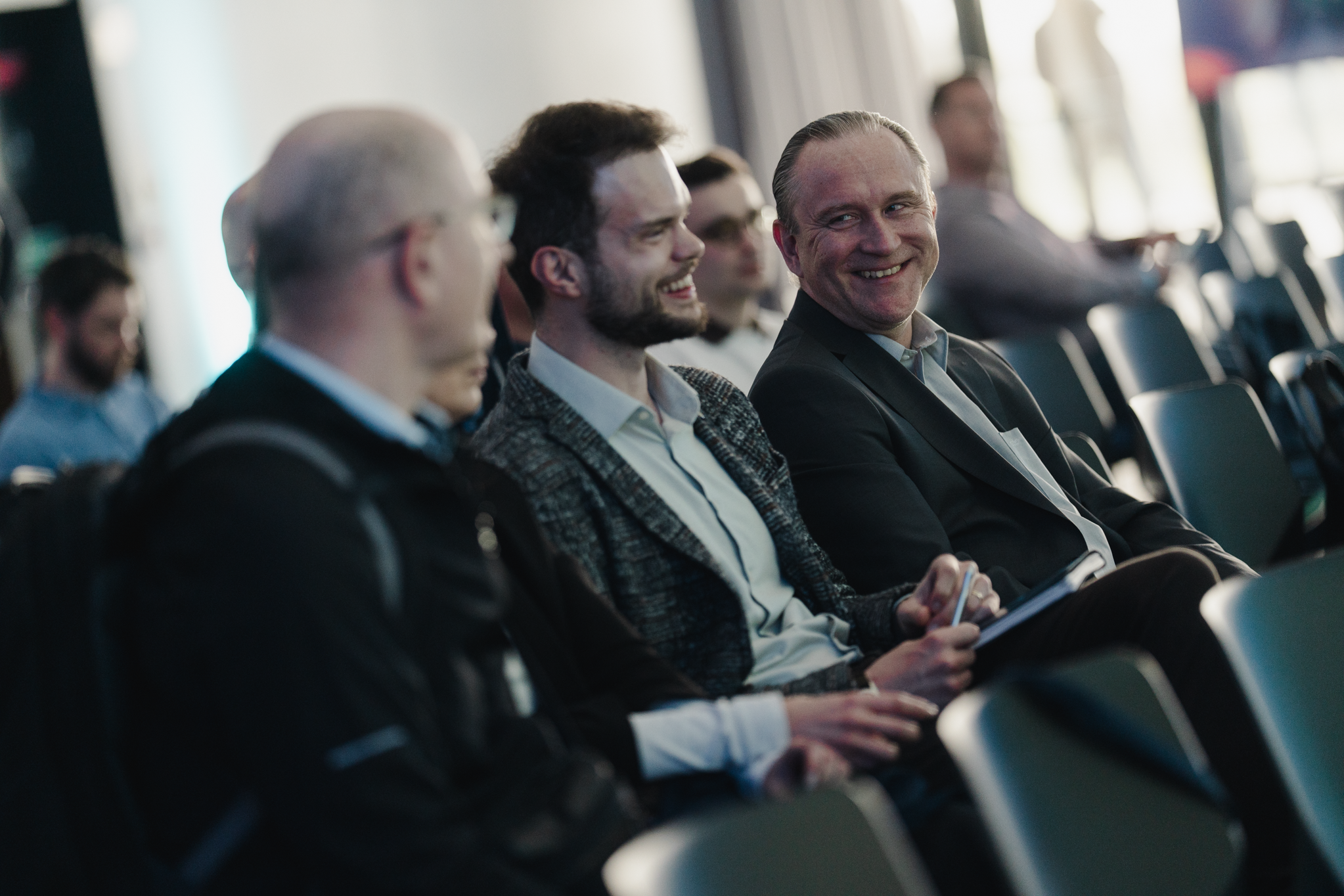
At Digital Factory, we believe that great work should be recognized and rewarded with opportunities to grow. This year, our colleague Milán Bognár, Data Analyst at Digital Factory, attended the Data and Innovation Summit in Stockholm as a result of being recognized as a Digital Hero, an internal award celebrating outstanding contribution and impact within the organization.
In this article, he shares key takeaways and reflections from the event covering industry trends, data foundations, organizational challenges, and what it takes to successfully bring AI into production at scale.
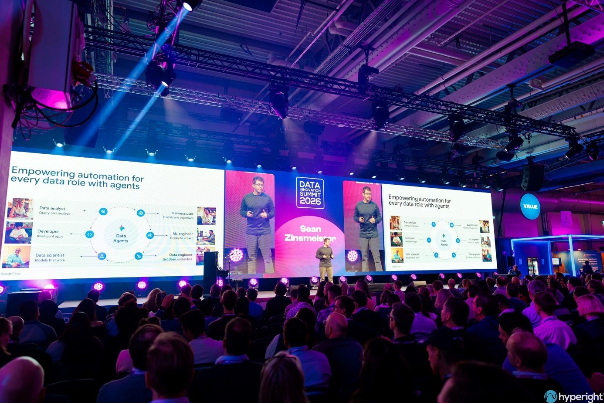
This year I had the opportunity to participate in the Data and Innovation Summit in Stockholm, one of the largest and most influential annual conferences in applied data and AI. The summit brings together data professionals, researchers, industry experts shaping the future of AI, as well as vendors showcasing their solutions. It creates a strong environment for exchanging ideas and exploring the latest developments in the field.
The event hosted more than 3,000 participants, over 350 speakers, and more than 100 partners and exhibitors.
Just imagine 350 speakers across a three-day conference. This is only possible because the event is structured into 14 stages, with multiple parallel sessions running every hour. Each stage focuses on a different topic within the broader data and AI landscape, which reflects how diverse and fast-evolving the field has become.
Alongside the presentations, the conference also featured workshops, hackathons, TIP sessions, and continuous discussions across the community. With so many parallel sessions running at the same time, the experience could feel overwhelming, but the motivation to absorb as much knowledge as possible and bring back relevant insights to Digital Factory remained constant throughout.
Speakers included representatives from companies such as Meta, Spotify, EA Sports, Google, NVIDIA, Samsung, and Databricks, among many others. The event took place at Kistamässan in Stockholm, which proved to be a well-organized venue with smooth execution across all stages.
After the conference, there was also time to explore the city, experience Nordic culture, and take part in the Data After Dark networking event.
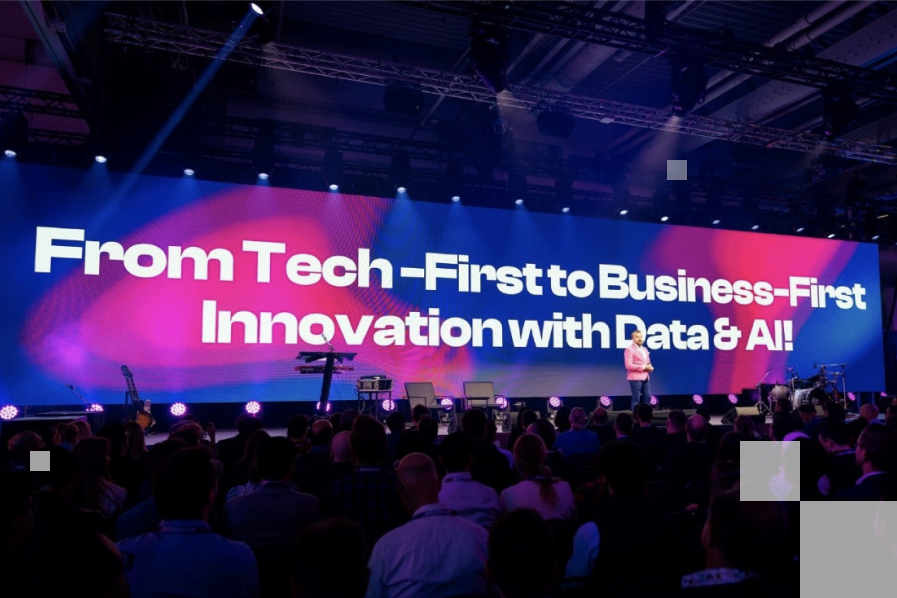
In recent years, much of the conversation around AI has been focused on the latest models and technological breakthroughs. This year, however, a clear shift emerged. As highlighted by the official theme of the conference, “From Technology-First to Business-First innovation”, the discussion moved from experimentation toward practical, value-driven implementation.
The key question is no longer whether AI works, but how it can be embedded into daily workflows and scaled within organizations.
Companies that are further along this journey share a common pattern. They did not skip steps in their data maturity journey, but instead built strong governance frameworks, ensured clear ownership, and prepared their organizations for change before scaling AI solutions into production.
Although technology now enables advanced AI solutions, strong data foundations remain essential. Governance, which was previously often seen as overhead, has become a critical prerequisite for successful implementation.
Without a single source of truth, clear definitions, and ownership, AI systems can easily amplify existing inconsistencies and reduce trust in the outputs they generate.
In the JustWatch presentation, we saw how agentic solutions can already operate in production environments. This was made possible by a structured maturity journey starting with a reliable data warehouse, followed by self-service capabilities, then a data chatbot integrated into Slack, and eventually a shift toward prompt-based analytical workflows instead of traditional coding.
This example clearly shows that skipping steps in data maturity is not an option if organizations want to scale agentic AI successfully.
A similar approach was presented by Coop, where a data companion was integrated directly into Microsoft Teams. One of the key learnings from this example was that adoption increases significantly when solutions are embedded into the tools where users already spend their time.
One of the key messages of the conference was: You cannot drive innovation from the machine room.
This reflects a broader truth that meaningful transformation only happens when business and IT work closely together. Without business buy-in, even the most advanced technological solutions often remain at the pilot stage.
A key enabler of this collaboration is a semantic layer that translates technical data structures into business terms. In many organizations, this layer still exists only in employees’ heads or in informal communication, which makes it difficult for AI systems to access consistent and structured context.
Governed context is what enables trustworthy AI outputs, and without it, models remain too generic to support real business decision-making.
Measuring the return on investment of data and AI initiatives remains a challenge for many organizations. According to Snowflake’s presentation, only 61 percent of companies that have adopted generative AI solutions actively measure ROI.
This is a crucial gap, as organizations need to understand whether their solutions actually save time, improve efficiency, or simplify daily tasks. AI initiatives must therefore be clearly connected to measurable business value.
At Digital Factory, this capability is a key strength, with a strong focus on measuring business impact and value realization.
A recurring theme throughout the conference was that digital transformation is not primarily a technology challenge. As highlighted in the Novo Nordisk presentation, transformation is roughly 10 percent technology and 90 percent people, culture, and change management.
Leadership support is essential to ensure that organizations can successfully adopt new technologies and ways of working. This also requires investment in people, continuous upskilling, and building data literacy across the organization, as human judgment will remain critical even in an increasingly AI-driven environment.
Citizen analyst programs are a strong example of this approach, where business users who are closer to operational problems are able to respond faster to changes and contribute more directly to data-driven decision-making.
Arla Foods presented their citizen analyst initiative, emphasizing the importance of data champion communities and structured mentoring programs. At Digital Factory, a similar Citizen Data Analyst program is already in place, helping to better understand local business needs and develop scalable group-level solutions.
The way organizations work with data and AI is clearly changing. The question is no longer if this transformation will happen, but how companies will adapt to it. Strong foundations remain essential for successful AI adoption, as without clear governance, ownership, and well-defined workflows, scaling AI solutions becomes significantly more difficult.
Key takeaways from the conference include:
Ultimately, successful AI adoption is not only about technology, but about context, culture, and organizational readiness.